
A Brief History Afternoon Tea
I invite you to get comfortable, enjoy this brief story about afternoon tea.
The history of afternoon tea can become complex, multi layered and is absolutely fascinating.
Afternoon Tea is a tradition that is part of English history. It began with simple intent but has evolved into quite the art form often the center of celebrations.
Initially used as medicine, tea was introduced to Britain in the 1650s. Soon after in 1662, a chest of dried tea leaves was included in Catherine of Braganza’s dowry to King Charles II as it was her favorite drink making the beverage more known to the upper classes.
Closer to home, the first tea shipment to arrive in Canada was imported by the Hudson Bay Company in 1716 and took more than a year to arrive.

March 2019, an afternoon tea for two guests.
Anna Russell, the 7th Duchess of Bedford is the character that we give credit to for the Afternoon Tea beginnings. Historically, at this time, an evening meal was served very late, 8 or 9pm. Having had light lunch around the noon hour the Duchess complained of “having that sinking feeling” during the late afternoon.
She requested from her kitchen staff something small to satisfy her hunger, nothing too substantial, just something to see her through to dinner time. From this the afternoon tea ritual as we know it was born.
Anna shared her tea snack ritual with friends, they in turn either joined with her or created their own 4pm tea snack ritual. The upper-class society women would change into long gowns, gloves and hats when visiting and hosting afternoon tea. An entire Afternoon Tea wardrobe was thus created for these upper-class families.
This 4pm tea snack was referred to as Afternoon Tea or Low Tea as it happened in the afternoon seated usually at a low table. Imagine sitting on a couch or sofa with your tea time set on the low coffee table in front of you.
While the term high tea was dinner for the working class, seated on chairs at the higher dining table.
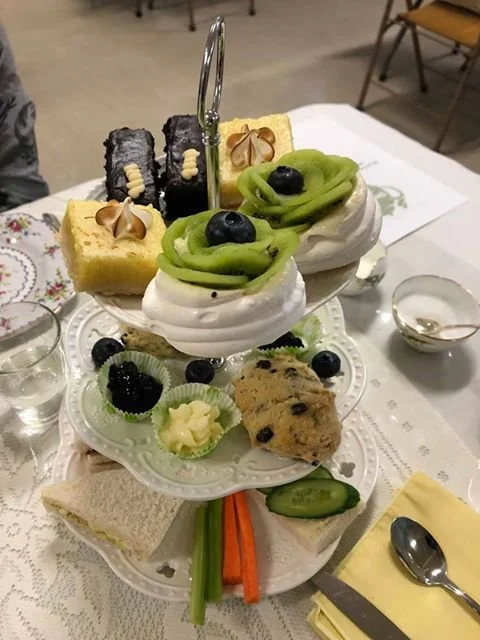
March 2019 Afternoon Tea for two
In the 17th and 18th centuries, coffee and cocoa were the hot drinks of choice and predominantly drunk by men in the coffee and chocolate houses of the day, where the drinks would be made by specialists.
Tea was easy to prepare, in contrast to the men’s coffee and hot chocolate. Preparing tea is simply the act of pouring hot water onto tea leaves. It was something women could take control of at home. They kept tea leaves in a wodden caddy which was locked away, since tea was ever so expensive. The female head of the house could portion out the leaves and brew them, which is why it has been said, ‘I’ll be mother’. It was an empowering experience for women at a time when they had precious few rights.
When the tax on tea was reduced, tea became more affordable, thus more people were enjoying a cup of tea. Tea houses began to flourish as a place that women could meet without men, enjoying sweet baked goods. Many early suffragette meeting took place in tea room. As time passed men too were allowed to frequent the tea rooms.
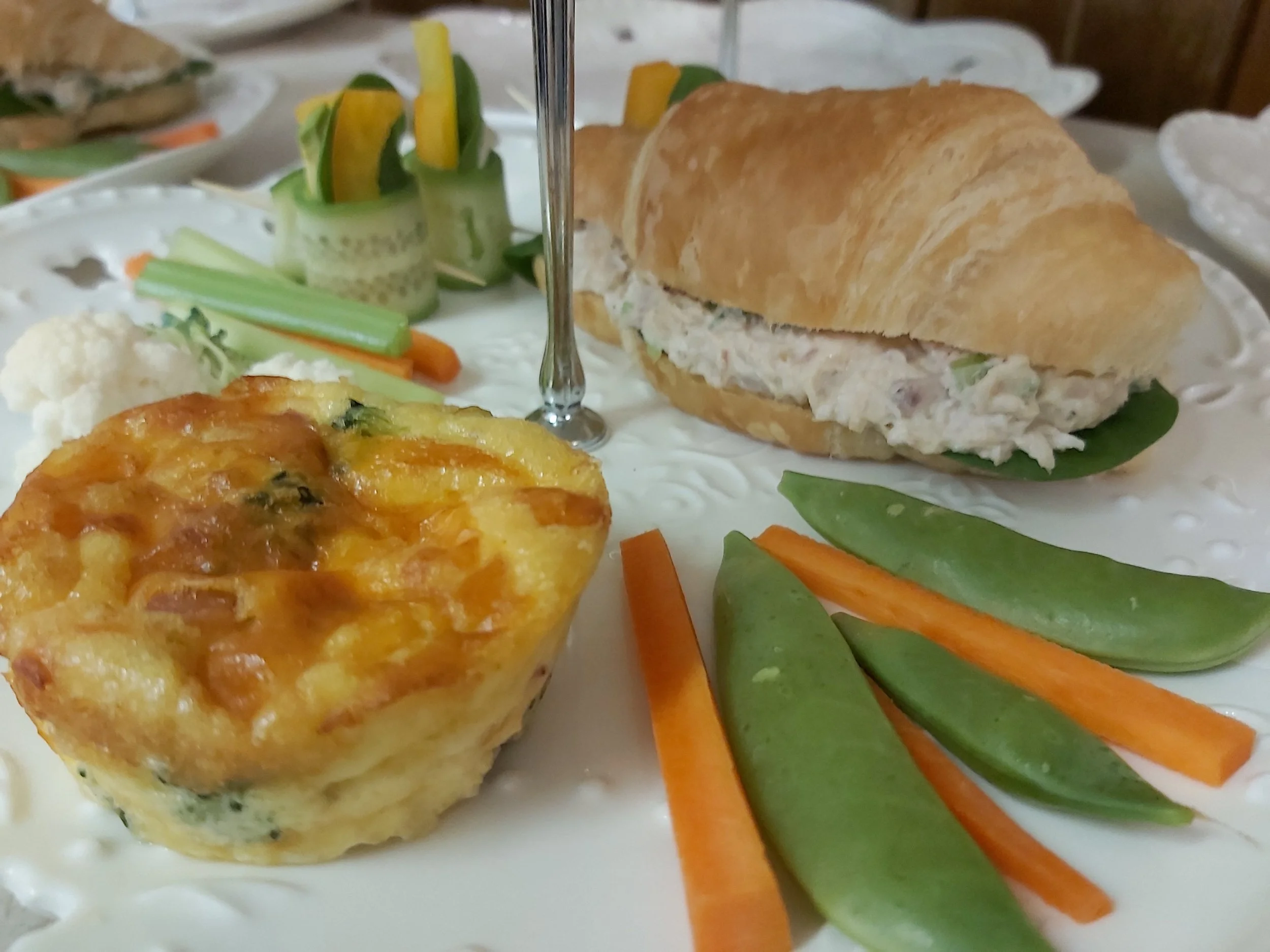
Dainty sandwiches or savories are the first course of this three course meal.
During the 1920 and 1930s afternoon tea was seen as an affordable way to have a little luxury. Indulging in a mid afternoon snack a lighter supper could be had to help the budget. During this time afternoon tea was served in high end hotels or luxury cafes.
Tea Time for the wealthy came with a whole host of accessories – fine porcelain teacups, bowls and saucers, decorative teapots, mahogany tea caddies, silver tea urns, exquisite table linens and personalized tea blends. For them, the afternoon tea table was one of great opulence and refinement, a place to express your identity, interests and taste.
Fashion was also influenced with special tea gowns, parasols, hats, fascinators, gloves and such. Tea etiquette evolved as well from the invitations, décor, food presentation, table setting and expectations of both guest and host.
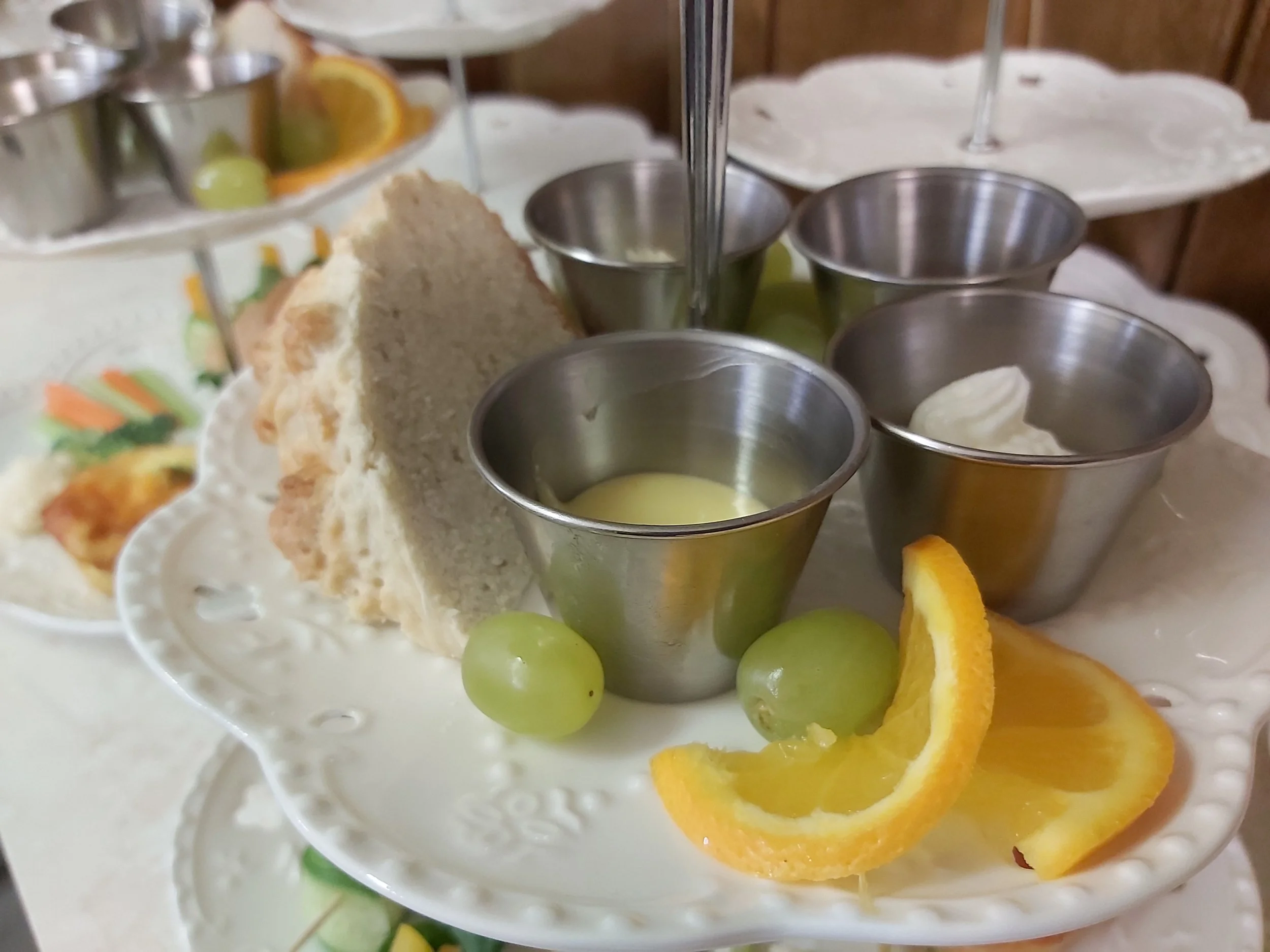
Delicious scones are served with condiments such as clotted cream, jam, lemon curd or whipped butter
The afternoon tea ritual made its way outside into the garden, thus encouraging the lords and men of the house to take part in this delicious activity. Where there is food there are men. During the 18th century, tea gardens became popular. The whole idea of taking tea in the garden was for ladies and gentlemen to take their tea together outdoors surrounded by entertainers. The tea gardens made tea all the more fashionable to drink, plus they were important places for men and women to meet freely.
Teacup reading brought fortune tellers to the afternoon tea experience. Speaking of teacups, the original teacup was so very small with no handle. When tea was brought to Europe from the east, tea was expensive thus a cup of tea was very small lacking a handle. In order to sip from the tiny teacup, one had to hold the pinky up to help balance. In later years teacups with a handle were introduced and the pinky was tucked in.
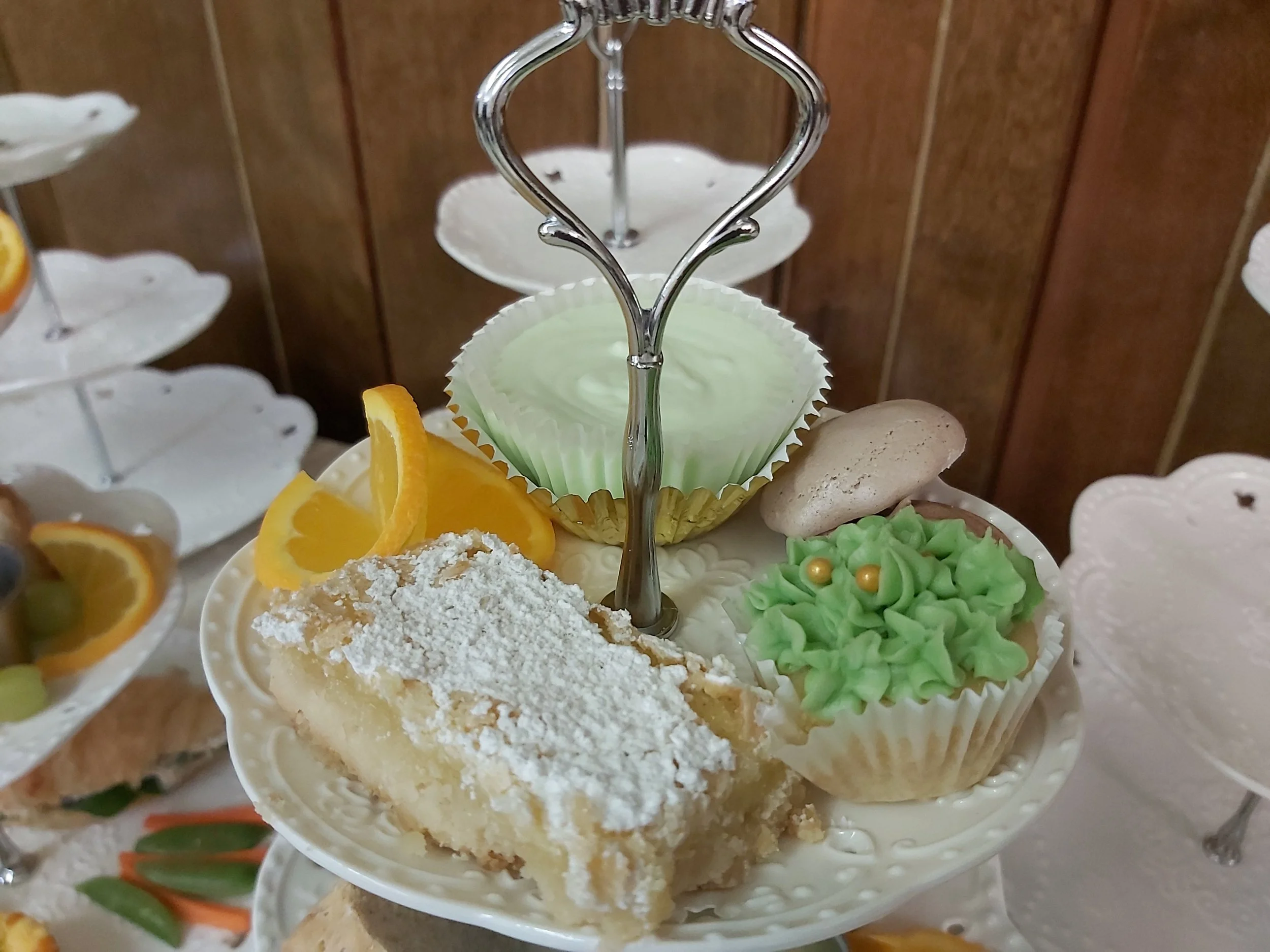
Delightful sweets are the last course to be enjoyed when experiencing afternoon tea
There is so much interesting history attached to the experience of taking afternoon tea. I never tire of reading another article.
Please share, what your favourite tidbits of afternoon tea history most fascinate you?